
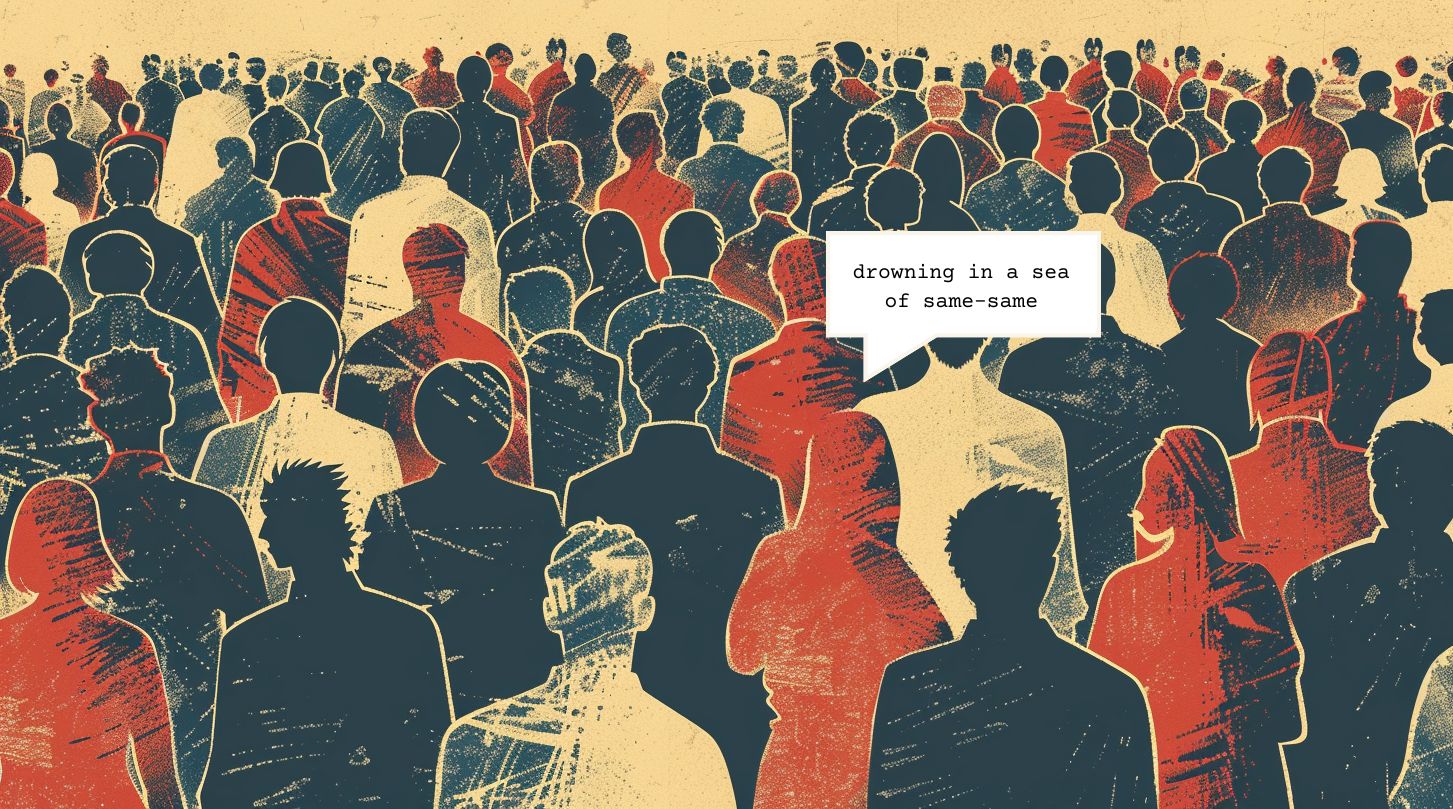

You know what’s wrong with this world?
We’re drowning in a society of snowflakes.
In ‘Old School’, Bill O’Reilly uses the term “snowflake” to describe people who are too sensitive and easily offended. They’re seen as fragile and easily upset, particularly in discussions about politics and culture. He criticizes those who can’t handle different opinions or challenges without feeling victimized.
But it’s not your fault.
We live in a society obsessed with mediocrity because it’s designed to keep us dumb, complacent, and confused.
🚫
Are YOU triggered?! If so, GOOD. 👏🏼
If it invoked a strong, negative emotion in you, it’s time to step back and ponder: WHY AM I FEELING LIKE THIS? If you expect to live a long, fulfilling life, you must unveil this illusion and escape this prison.
Chasing everything that triggers you is the first step.
Let’s get started.
Why Mediocrity Reigns Supreme
We live in a world that whispers sweet nothings of “average is good enough.” A subtle conditioning, a constant hum in the background that lulls us into a state of passive acceptance.
We might feel like we’re in control, making our own choices, but a startling truth lurks beneath the surface—95% of our thoughts, actions, and decisions are driven by subconscious programming.
Modern philosophy challenges the idea of absolute free will. Our subconscious is a powerful force, shaped by experiences, societal messages, and subtle cues we barely register.
Internally— habits, emotions, and past experiences play a role.
Externally— environment, culture, and media bombard us with cues.
Even our genes and brain chemistry can tip the scales.
The System: A Master of Manipulation
But here’s the dirty secret: average is a slow-simmering death sentence.
The system— Big Food, Big Pharma, a complicit healthcare industry, and a corrupted government— wants you content with the status quo, a lukewarm cup of existence instead of a life brimming with vitality.
Big Food bombards us with calorie-laden, nutrient-devoid options, fueling an epidemic of chronic health issues as they invade our public schools and hijack our brains.
Big Pharma thrives on a population dependent on medication, not prevention while funding medical schools and creating standards for clinical trials to serve their own purpose.
A complicit healthcare industry often prioritizes profits over preventative measures, and lobbyists push agendas prioritizing short-term gain over long-term public health, influencing government.
This “system” we operate within is vested in keeping us mediocre.
Why? A healthy, empowered population brimming with strength and vitality threatens the control it wields. Being content means you don’t ask questions.
We say: IT’S TIME TO START ASKING QUESTIONS.
Cosmic Insignificance: Your Starting Point To Longevity
Why are some of us born to question everything? I’ve seen past this veil since I was 5, questioning religion when forced to go to church with my cousins.
I had my first out-of-body experience when I was 6. I found myself floating in space, looking down into our Milky Way, and I said to myself, “Wow, we are so tiny and insignificant in the grand scheme of things.” That was when I realized the universe doesn’t give a fuck about us. I remember this moment like it was yesterday, which has shaped my reality since then.
📝 I wrote about this in the past if you're curious for a deep dive. They call it “Cosmic Insignificance Therapy”.
Why You Need To Care
We know we need to take action, but many of us never get started.
Want to close the gap between knowing and doing?
The purpose of this article is to stimulate your thinking and ignite your desire to take action.
Understanding these concepts is essential because grasping the root cause of human existence and how we are wired is the key to unlocking our true potential for longevity.
1. Evolutionary Programming
We’re programmed for survival, not long-term well-being. The systems listed above exploit this, leading to mood disorders and chronic diseases. Here’s the twist: YOU CAN REWRITE THE CODE. Understanding these primal urges allows you to make conscious choices, prioritizing a long, fulfilling life over fleeting cravings or societal pressure.
2. Longevity Goes Beyond the Body
It’s also mental acuity, emotional well-being, and a zest for life; aging is a mindset. Decoding the connection between your mind and body is the ultimate optimization cheat code to unlock all aspects of your existence.
3. Preserving Your Potential
The risk of cognitive decline increases as you age. By understanding the culprits behind memory fog, you can implement strategies to keep your mind sharp, your memory blazing, and your ability to learn new things well into your later years.
4. Escape The Matrix
Society whispers, “Average is good enough,” but you’re not buying it. This knowledge is your escape pod from the clutches of societal conditioning.
Break free from unconscious patterns and unlock the power to make informed decisions that propel you towards a life that’s not just long but ridiculously fulfilling.
This article is your operating system upgrade to navigate past programming and societal pressures and break free from the matrix.
We teach you to make informed decisions that rewrite the script on health and wealth, all fueled by the incredible power of your unique brain and neuroplasticity.
We will start with neurodivergence— because it’s all about our brains. Once we understand our brains, we take back control of life.
Why neurodivergence? This will unlock the story behind innovation and the profit-driven industrial machine that created conforming worker ants. You'll learn why some people easily conform while others can see through the veil.

PS. It's not your fault!
Are You Naturally Wired For Survival?
Listen, I have AuADHD, and conformity isn’t in my DNA.
ADHD brains are wired to read between the lines. I wish everyone had this skill. Being neurodivergent means we struggle with the rigidity of society. We need the freedom to be creative and thrive. It’s simply a survival mechanism.
According to Gabor Mate (a holocaust baby), ADHD means mom was stressed during pregnancy, and we couldn’t emotionally attune with her, so our brains are wired for “survival” in response to stress. As a result, ADHD’ers evolved with certain evolutionary advantages that were useful back in the day:
- Hypersensitivity: Increased awareness of surroundings to detect threats.
- Creativity: Enhanced problem-solving skills to navigate challenging situations.
- Risk-Taking: A willingness to explore new options to escape danger.
While ADHD can come with struggles, understanding its potential evolutionary roots can be empowering.
Neurodivergence: A Double-Edged Sword
The Challenges
If you have a neurodivergent friend on the spectrum, you may think their traits are problematic because their brains do not mesh with society’s rigidity.
Hypersensitivity can lead to anxiety, and risk-taking can lead to impulsiveness.
Difficulty focusing and staying organized may also arise.
They need freedom to explore on their own terms and be creative.
Modern society is less threatening (no more lions) and designed for neurotypicals whose brains have no problems “focusing”.
ADHD’ers don’t either—except for their hypersensitivity, causing attention to be diverted everywhere.
The problem isn’t the lack of focus but the regulation of focus.
However, even neurotypicals are suffering as invisible lions emerge in the form of:
- high rents
- the tax man
- dooms scrolling
- toxic workplaces
- information overload
- arguing with strangers on the internet or your distant uncle on Facebook with opposing political views
- your unsupportive friends and family who don’t support your personal growth
- stress from everyday life.
Here’s an important point: the prevalence of ADHD-like traits might not necessarily indicate a rise in neurodiversity itself but rather a response to a stressful environment that doesn’t cater to a diverse range of cognitive styles.
The Strengths
In some situations, heightened alertness, problem-solving, and adaptability can be assets.
For example, creativity fuels innovation, and risk-taking leads to new opportunities. In fact, 35% of US entrepreneurs are dyslexic, and ADHD-ers are twice as likely as peers to start a business after graduating college.
You wouldn’t want all tribe members like this, but up to 10% keeps everyone on their toes, and the arc of human progress maintains course.
How Neurodivergence Ties Into Longevity?
Because if you want to survive, you can’t have to be able to see beyond the veil.
It’s time we came together, learn from each other, and utilized the power of neuroplasticity.
If neurodivergents can rewire our brains and adapt to modern-day society, neurotypicals can develop the survival traits that keep humanity on its toes and ensure the arc of human progress and evolution.
But first…
A History of Mediocrity: From Artisanal to Assembly Line
Let’s go on a journey to learn about how we got to where we are and what we can do about it.
Our hunter-gatherer ancestors thrived because of diversity. The “scatterbrained” hunter with exceptional spatial awareness might excel at finding food, while the detail-oriented individual meticulously crafts tools. This spectrum of minds served humanity well.
The Industrial Revolution and Standardization
The Agricultural and Industrial Revolutions ushered in an era of mass production, demanding a workforce skilled in repetitive tasks and sustained focus. Throughout history, advancements in science, technology, and infrastructure required sustained focus and collaboration. Completing complex projects often relies on concentrating, following through on tasks, and navigating social hierarchies— an arena where neurotypical traits such as the ability to focus for long periods of time excel.
This could be the first time neurodiversity, once an asset, began to be seen as a deviation from the norm.
The Bastardization of Education: Dumbed Down Workers
With the rise of factories, the need for a standardized workforce became paramount. Skills like rote memorization, following instructions to the letter, and remaining focused on repetitive tasks were suddenly in high demand.
Education, once a flexible space for exploration and fostering diverse skillsets, morphed into a rigid tool designed to churn out a specific kind of worker: a cog in the ever-growing machine of industrial capitalism.
The emphasis shifted from nurturing curiosity and critical thinking to the mindless memorization of facts and figures. This one-size-fits-all approach directly affected the strengths of learners who excel at linearly absorbing information.
The lack of understanding and flexibility in the education system fostered a culture of labelling and pathologizing.
For neurodivergent minds, particularly those with ADHD, memorization learning became a monotonous torture chamber. Their natural inclination to question, explore, and learn through hands-on experience was deemed disruptive and punished.
Children who struggled in the factory-style classroom, forced to sit still for hours, went against the very grain of their neurodivergent existence, often exhibiting signs of restlessness, impulsivity, or difficulty focusing.
Being neurodivergent became a learning disability.
Imagine the Renaissance: artists like Michelangelo thrived with their ability to hyperfocus on detail and lose themselves in creativity. Their work wouldn’t have been possible in a factory setting. Fast-forward to the Industrial Revolution. Henry Ford’s assembly line demanded a different kind of mind that could meticulously repeat tasks and fit into a rigid system.
This shift favored neurotypicals, pushing the “artisanal mind” to the margins. This period likely saw a rise in undiagnosed neurodiversity, potentially leading to feelings of inadequacy and social alienation.
The Cog in the Machine: Average Standards Stifles Innovation
One-size-fits-all approaches often disadvantage those who learn differently.
Albert Einstein, a likely dyslexic whose path wasn’t paved with straight A’s, struggled with traditional schooling but revolutionized physics with his brilliant way of thinking. Accounts suggest delayed speech and struggles with reading and writing, classic signs of dyslexia. While his classmates sailed through language-based subjects, Einstein might have felt like he was swimming upstream.
This frustration, however, fueled a different kind of brilliance.
Undiagnosed and perhaps misunderstood, Einstein’s unique brain, with its exceptional visual-spatial reasoning, found its perfect playground in the world of math and physics, ultimately leading him to scientific breakthroughs that continue to shape our understanding of the universe.
Standardized tests can’t measure his kind of genius.
It’s not just about factory workers and artists. Many engineers, known for their meticulousness and ability to visualize complex systems, fall on the neurotypical spectrum.
But what about the risk-taking, big-picture thinkers who drive innovation? Steve Jobs, himself potentially neurodiverse, challenged the status quo and brought us the iPhone.
A Conformity Crisis: Social Norms and Expectations
Societal norms often involve nonverbal communication, picking up on social cues, and building trust. These can be challenging for some neurodiverse individuals. Historically, those who didn’t fit the mold were often ostracized or misunderstood.
Neurotypical social interaction relies heavily on unspoken cues: a raised eyebrow, a knowing smile, and a shift in body language. These can be as clear as language to neurotypicals, but for some neurodiverse individuals, they’re like hieroglyphics.
Some neurodiverse individuals, particularly those with ADHD, might appear disinterested in social cues because they’re hyperfocused on their own interests. This doesn’t mean they don’t care; it just means their attention is directed differently.
For those with autism spectrum disorder (ASD), every social cue – facial expressions, body language, tone of voice – needs to be consciously analyzed, leading to information overload because their brains cannot process social cues subconsciously like neurotypicals, like an internal translator running in the background.
💡 Note: It's important to remember neurodiversity is a spectrum.
Joining Forces: Neurodiversity & Longevity
We’ve challenged the limitations of “average” and explored the superpowers of neurodiversity. Now, let’s bridge the gap between neurotypes and unlock the secrets to a long, healthy, wealthy, and fulfilling life – for everyone.
Neurodivergent minds:
- Creative Spark: They ignite the orchestra with fresh ideas and unconventional connections.
- Impulsive Action: They’re the dynamic percussionists, driving innovation with a willingness to take risks.
- Resilient Spirit: They face challenges head-on, fostering a “never give up” rhythm that benefits everyone.
Neurotypical minds:
- Clear Communication: They translate brilliant ideas into actionable plans that everyone understands, like the conductor leading harmony.
- Organizational Finesse: They ensure projects run smoothly and resources are used efficiently, like the meticulous strings section.
- Empathetic Connection: They build trust and create a supportive environment, fostering a foundation of care for the entire orchestra.
This isn’t “us vs. them.” It’s “us, together.” To create a masterpiece, we need both raw energy and structured execution. By coming together and learning from each other, neurodivergent and neurotypical minds can bridge their strengths and extend each other’s health span for a lifetime.
How To Take Back Control
We created this system designed to keep us in this state, allowing us to be controlled as a part of the cog in the machine— so we can break out of it.
I know because I grew up with my dad constantly reminding me to save money, show up at my 9-5 like a good girl, pay my taxes while living paycheck to paycheck, and live only for weekends. I didn’t believe any of that BS. Sorry, Dad (still love you; you didn’t know any better).
You can take back control. I did.
An undiagnosed neurodivergent brain wasn’t afraid to challenge the status quo. It just feels natural. IYKYK.
11 Ways to Stop Drowning in Mediocrity
1. Stay Active
You see, my dad also has ADHD and grew up in poverty. That must be stressful. I’ll never forget visiting my grandmother’s cage home in Hong Kong when I was 5. 😥 But he was a wonderful dad who stayed functional because he was a triathlete and participated in sports all his life. He’s now retired and living his best life, riding his bike all over.
Exercise makes you sweat and boosts brainpower by increasing blood flow and enhancing focus, memory, and cognitive function. This is partly due to BDNF, which strengthens brain cells and promotes new connections. Exercise also combats fatigue, elevates energy levels, relieves stress, and improves sleep — all essential for mental clarity and decision-making to regain control.
2. Rewire Your Routine
Habits are powerful but not set in stone. Craving sugar every afternoon? Swap it for a healthy snack. Feeling glued to social media? Designate tech-free zones. Small changes add up, and baby steps result in quantum leaps.
Pro-Tip: Try habit-stacking.
3. Become a Label Detective
We’re bombarded with messages telling us what to think and do. Actively question the information you consume. Is it fact or opinion? Who benefits from this message?
4. Befriend Your “Why”
Many habits and choices are on autopilot. Before diving in, ask yourself, “Why?” Is this aligned with your goals and values? Understanding your motivations empowers conscious choices.
5. Challenge Your Inner Critic
Negative self-talk can hold you back. When that voice whispers doubt, challenge it. Replace negativity with affirmations that reflect your true potential.
💡 Learn to overcome your Monkey-Mind.
6. Feed Your Curiosity
The more you learn, the more empowered you become. Explore healthy living, critical thinking, and anything that sparks your interest. A curious mind is a powerful tool for navigating the world. This is where the concept of “increasing your surface area for luck” comes in—the more experiences and connections you have, the more likely you are to stumble upon opportunities.
7. Create Your Own Opportunities
Opportunities rarely knock on your door. Peak performers go out there to find them. Instead, stay curious, explore new interests, network with like-minded people, and actively seek opportunities to learn and grow. Take extreme ownership because no one is coming to save you.
📖 Read: How To Bend Reality
8. Embrace Abundance
Shift from a victim and scarcity mentality to an abundance mindset. Believe that there are enough resources and opportunities for everyone. Choose collaboration over competition. Turn intimidation into inspiration. Celebrate the success of others and see it as a sign of your own potential— we’re the average of our environment. This positive outlook attracts opportunities and empowers you to seize them.
9. Be Comfortable With The Uncomfortable
Nothing worthwhile grows in your comfort zone. That’s where mediocrity thrives. Ew. Don’t wanna be there. The fun is outside your comfort zone anyway! Don’t shy away from new challenges or unfamiliar situations. You can get good at this by practicing it repeatedly.
10. Frame Your Mindset for Success
Your thoughts shape your reality. Cultivate a growth mindset, BELIEVING that you can learn and improve. Self-belief is absolutely non-negotiable. Focus on what you can control, and visualize yourself achieving your goals. This positive outlook attracts opportunities and empowers you to seize them.
11. Master Focus
In a world fighting for your attention, focus is a superpower. Critically evaluate information. Question the source, its motives, and the evidence presented. Don’t let fear-mongering or emotional manipulation cloud your judgment.
Not everything deserves your attention. Learn to say no to distractions and focus on what truly matters to you and your goals.
Meditation and mindfulness practices can help you become more aware of your thoughts and distractions. By training your attention, you can choose where to focus your energy.
💡 Click here to master Flow States.
Up Next: Lies You’ve Been Told
We hope you learned something new today!
Now that you understand the nature of the human brain and have a brief history of how we got here, we’ll explore sneaky ways your brain is being hijacked in the next edition of Longevity Without Obsession.
Drowning in a sea of sameness.
