


Are you one of the millions freaked out by your cholesterol numbers?
Conventional wisdom, and a quick Google search, has left people trembling at the sight of high LDL, labelling it a heart attack waiting to happen and villainizing healthy staples like red meat and eggs.
Add to that the self-diagnosis epidemic: type “high LDL” into Google, and you’ll be flooded with dire warnings labelling it as “bad,” pushing panic buttons and leading to misguided diet choices— all without understanding the whole picture.
This misinformation spiral leaves many ditching healthy staples based on half-truths, ignoring how lifestyle and context shape the story.
My Cholesterol Journey
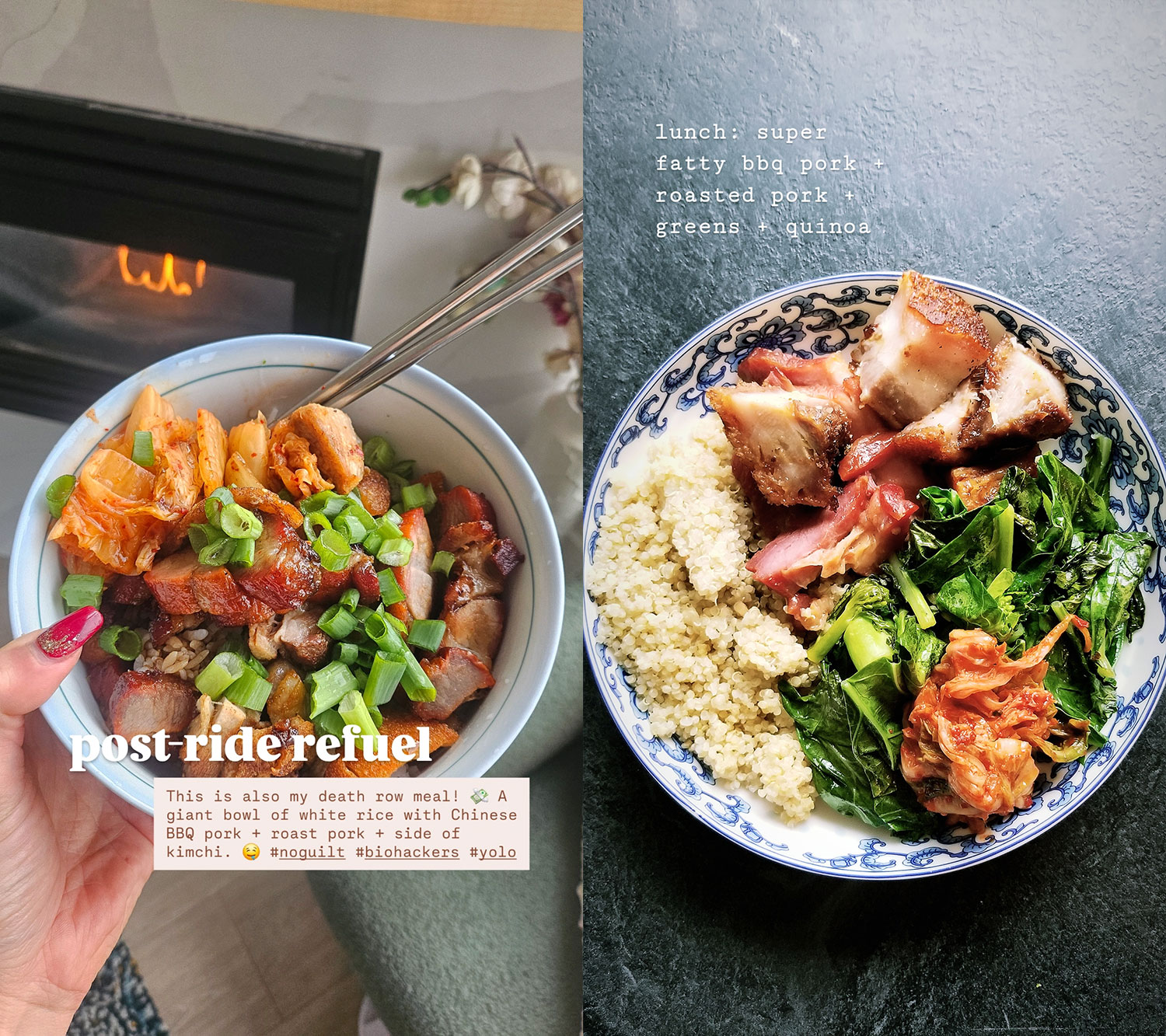
As an endurance cyclist powering through 60-100km rides 3-4x/week, lifting heavy at the gym 3x/week, and a biohacker obsessed with peak performance, I’ve flipped the script with a high-protein, high-fat diet loaded with grass-fed beef and pasture-raised eggs. Plus, I’m Asian, and I love my crispy, Chinese roast pork and barbecued pork… and RICE IS LIFE. 🍚 IYKYK.
For the past 15 years, I’ve never dieted or counted calories, nor worried about portion sizes. Never stressed out over holiday dinners.
My most recent blood work shatters the old-school cholesterol panic with proof that meat (and other good habits) fuels vitality, not disease. Here’s the data:
- Total Cholesterol: 214 mg/dL (slightly elevated, but the full picture tells a different story)
- HDL (“Good” Cholesterol): 93 mg/dL (exceptionally high, a heart-protecting powerhouse!)
- LDL (“Bad” Cholesterol”): 110 mg/dL (slightly above old threshold, yet balanced by key markers)
- Triglycerides: 63 mg/dL (remarkably low, showcasing top-tier fat metabolism)
- Total Cholesterol-to-HDL Ratio: 2.3 (optimal at <3.0 for women, gold standard for heart health)
- HOMA-IR: ~0.36 (outstanding insulin sensitivity)
- ApoB: 70 mg/dL
- CRP (Inflammation Marker): 0.29 mg/L (low inflammation)
- VO2 Max: 50 mL/kg/min (elite fitness level, will retest on bike b/c fear of treadmills held back my effort 😆)
⚖️ My numbers are not perfect considering I live 80/20 lifestyle, eat cake, party 🥃, have stressors— but energy levels are always stable, recovery's fast, never in a bad mood, and relationships are fantastic, innerpeace is at all time high, and I LOVE Mondays. I prioritize a balanced, joyful life over chasing flawless data points.
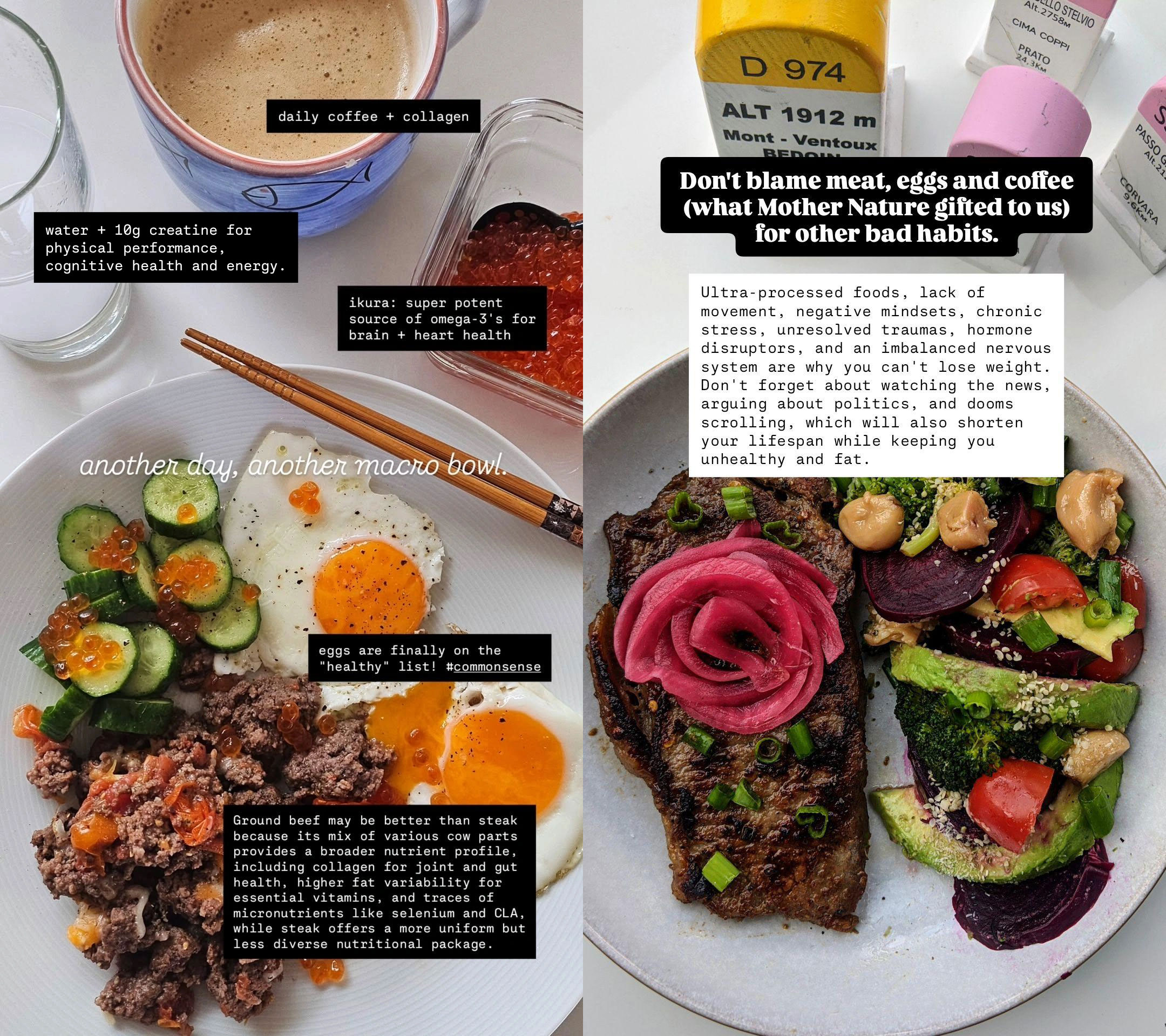
Remember: High HDL and low triglycerides are stronger predictors of heart health than LDL alone, along with triglyceride-to-HDL ratio.
Doctors trained pre-2010s might raise alarms over my LDL and total cholesterol, clinging to low-fat myths and statin prescriptions. But my sky-high HDL, rock-bottom triglycerides, and perfect ratio (2.3), paired with an active lifestyle (excellent VO2 max) and low inflammation (CRP), tell a truer tale: meat isn’t the villain it’s made out to be.
Emerging science backs this shift. In metabolically healthy individuals, elevated LDL may not be as harmful, especially when accompanied by low inflammation and a high VO2 max.
Strategic carb timing, along with rejecting high-carb or vegan diets that clash with my physiology, fuels success. I’ve abandoned the low-fat dogma, and new research supports me:
☑ Quality red meat and eggs deliver iron for oxygen
☑ B12 for energy
☑ Choline for brain health
☑ Nurturing muscle repair, hormone balance, and longevity rather than clogging arteries
Why a Full Lipid Panel Matters
Understanding your lipid health requires more than a quick glance at total cholesterol.
A comprehensive lipid panel, which measures HDL, LDL, triglycerides, and the total-to-HDL ratio, provides a complete picture of cardiovascular risk and metabolic health.
Isolated numbers like LDL can mislead without context, while HDL and triglycerides reveal how efficiently your body handles fats.
Beyond these traditional markers, you might hear about ApoB.
Think of ApoB (Apolipoprotein B) as a “ticket counter” for all the cholesterol-carrying particles that can potentially cause plaque.
Every single LDL particle (the “bad” cholesterol), plus other potentially harmful particles, carries exactly one ApoB protein on its surface.
This means measuring ApoB gives you a direct count of all the “troublemaker” particles in your bloodstream, regardless of how much cholesterol they each carry.
It’s often considered a more accurate predictor of cardiovascular risk than LDL cholesterol (LDL-C) alone because it counts the actual number of potentially harmful particles.
Don’t settle for partial data. Demand the full story to take charge of your health.
Why High LDL Isn’t the Enemy You Think
For years, LDL cholesterol has been branded “bad,” causing widespread panic. But the science is evolving and being debated.
It’s not just about the amount of LDL, but the type.
Think of LDL as tiny particles: there are large, fluffy ones (like beach balls) and small, dense ones (like pebbles).
It’s these small, dense LDL particles that are the real troublemakers.
They’re tiny enough to slip into artery walls, get stuck, and cause inflammation and plaque buildup.
The larger, fluffier LDLs are less likely to do this.
This is why tests like ApoB are so valuable, as they count the actual number of these potentially harmful particles.
Remember, LDL is only a small piece of a much larger puzzle when it comes to your longevity. Your overall picture, including factors such as inflammation levels, triglycerides, insulin sensitivity, and lifestyle choices like diet, exercise, and stress management, tells a far more complete story than just one cholesterol number.
⚠️ The important nuance: Most people don't live a consistently healthy, active lifestyle. Those with more inflammation and less efficient metabolisms, high cholesterol, especially LDL, often pose a higher risk. This is why it's crucial to understand your full lipid panel, maintain healthy habits,

Strategic Longevity Tips to Maintain Healthy Bloodwork
To keep your lipid panel thriving, inflammation low, and bloodwork stellar like mine, adopt these proven strategies:
- Embrace High-Quality Proteins and Fats: Prioritize grass-fed beef, pasture-raised eggs, and wild-caught fish to boost HDL levels and lower triglycerides. Avoid processed meats for optimal benefits.
- Master Carb Timing: Restrict refined carbs and schedule complex carbs (quinoa, sourdough, sweet potatoes) around workouts to enhance insulin sensitivity and prevent triglyceride spikes. I personally love having my carbs for dinner because it also helps me sleep! Find out what works for you.
- Commit to Regular Exercise: Engage in endurance activities and strength training to elevate HDL and reduce inflammation.
- Optimize Hydration and Electrolytes: Consume 2-3 liters of water daily, supplementing with 500-1,000mg sodium during intense rides to support metabolic health.
- Prioritize Quality Sleep: Aim for 7-9 hours of restorative sleep each night to lower inflammation and stabilize lipid levels, thereby countering the impact of occasional poor sleep.
- Leverage Nature for Stress Relief: Spend 20-30 minutes outdoors daily to reduce cortisol levels, which can impact cholesterol and inflammation.
- Live a Balanced Life Applying the 80/20 Rule: Maintain 80% healthy habits (diet, exercise, sleep) while allowing 20% flexibility (e.g., wine, dessert, partying) to sustain long-term adherence without burnout.
The Take-Away
My journey proves context reigns supreme: my lipid panel reflects a thriving body fueled by meat and eggs, far from a one-size-fits-all average.
For example, my thalassemia traits affect my lab results, so I avoid comparing myself to standard benchmarks without taking into account my unique physiology.
Lifestyle choices (exercise, diet, sleep) shape these results far more than isolated numbers.
What works for me may not work for you (duh)!
I’m a hardcore endurance cyclist who logs gruelling rides, a trained holistic nutritionist who crafts most meals from scratch, and someone who has invested years auditing my environment for optimal health (clearing toxins, optimizing sleep, and refining my surroundings). I’ve built a lifestyle that works uniquely for me.
This intensity and dedication might not mirror everyone’s path; my fitness level, nutritional expertise, and proactive environment sculpt a foundation that sets me apart. Yet, this is precisely where inspiration takes root! If I can rise from challenges—balancing intense training, mastering my diet, and overcoming personal hurdles—through hard work upfront, you can too.
The key lies in your willingness to invest that initial effort, tailoring your approach to your own body’s needs with the same grit I’ve applied.
Ditch the conventional doctor trapped in the outdated cholesterol fear paradigm, where low-fat diets and statins reign supreme without nuance.
Find a holistic partner who sees your health as a living story, not a checklist.
Context and lifestyle choices (exercise, nutrition, rest, and environment) consistently outweigh isolated metrics.
I am part of a premium longevity concierge program. My longevity doctor and I also explore how high-level athletes differ from the average individual in lab work, pushing personalized medicine forward.
Anti-Disclaimer: Don’t Be Stupid
This isn’t medical advice. This reflects my journey, not your prescription.
My ultimate goal is to trigger you to take meaningful action because, as we biohackers know, no one is coming to save us.
I trust you have the intelligence to navigate the overwhelming amount of information available and determine what works best for you.
No one is coming to save you, my darlings.
Conventional society wants you dependent on experts, but you’re smart enough to take charge, one step at a time. Let the experts guide you, but you must take the lead.
Rely on your innate wisdom and common sense to cut through the noise.
⚠️ If you don’t live a similar lifestyle as me, obviously, you should be aware of your cholesterol intake because your body may not be as efficient at metabolizing fat. Factors such as lower activity levels, different dietary habits, or genetic predispositions may affect how your body handles a high-fat diet. Monitor your lipid panel and adjust your treatment based on your individual health markers, seeking guidance from a healthcare professional if needed.
If I can do it with hard work upfront, so can you. Start your journey today.
