

We have said this before, but we’ll remind you again: NO ENERGY, NO LIFE. Here at Longevity Palace, we are obsessed with optimizing our mitochondria, the power centers within each cell.
One of the biggest epidemics we face is an energy crisis— people no longer have the energy to stay disciplined and motivated and live their best lives. They’re sluggish, foggy-brained, and perpetually exhausted.
The solution is to learn how to manage your energy, which will also result in:
- Upgraded Physical Performance
- Unstoppable Productivity
- Stronger Relationships
- Increased Confidence
- Enhanced Creativity
- Reduced Stress
- Innerpeace
- Longevity
Here is one of my favourite biohacks to incorporate into your daily routine. It has been a game changer for me, and I promise that if you do it right, your life will change:
Biohacking caffeine eliminates jitters and sensitivity while increasing mental focus and energy.
I instantly discredit anyone who tells me coffee is terrible for me. There is nothing wrong with coffee, but the problem lies in how you drink it.
The problem? Most people abuse it. They treat it like a crutch, a desperate attempt to jumpstart a sluggish system.
Coffee, just like meat, eggs, and even our wonderful sun ☀️ has been used as a scapegoat for people’s bad habits! I mean, these are gifts for Mother Nature herself.
Caffeine and jitters? Look for the root cause, such as your lack of sleep, bad diet, or negative thoughts. It’s most likely not the “coffee” itself.
When done right, coffee can be an extraordinary cognitive enhancer and an incredible source of antioxidants.
Coffee is the ultimate comfort elixir and tastes exquisite. As long as you don’t depend on it solely for “energy,” there is no need to listen to crazy people who tell you you “must give it up to be healthy.” 🙈
But no judgment here; you do you, I do me! 😈
I am here to shout to all my fellow coffee lovers: if you learn to do it right, you can still drink this magic elixir every morning without side effects.
Here’s why you should love coffee:
- Mood booster
- Improved focus
- Cognitive benefits
- Increased alertness
- Enhanced athletic performance

Pro-Tip #1: Delay coffee until 90 minutes after waking.
When you wake up, your body initiates a symphony of hormonal responses. Cortisol, the stress hormone, begins its ascent, making you energized and alert while preparing you for the day.
💡 Pro-Tip: Stress isn’t all bad. We need it to survive.
Immediately slamming coffee disrupts this delicate dance. You’re hitting the snooze button on your body’s natural alarm clock.
Adenosine is a neurotransmitter that builds up in your brain throughout the day.
It helps set our “clock” for the day.
As it accumulates during the day, you start to feel increasingly tired.
As we sleep, our body clears it so we can begin the next day refreshed.
Caffeine blocks our body’s ability to absorb adenosine.
Have you ever woken up groggy? If so, you probably have adenosine in your system because you didn’t get a good night’s sleep (and possibly had too much coffee yesterday and the day before that).
Drinking coffee immediately after waking prevents your body from naturally clearing adenosine because it blocks the receptors rather than reduces the adenosine.
This adenosine will accumulate over time and have adverse compounding effects.
When caffeine wears off, the adenosine that was being “held back” by caffeine suddenly connects to its receptors in your brain. At the same time, your body keeps making more adenosine as part of its normal processes.
This combination of old and new adenosine hitting your brain can make you feel extra tired or groggy, leading to a “crash.”
Worse, this accumulation of excess adenosine over time causes long-term adverse effects and caffeine dependence. You are stuck in a negative feedback loop of depending on caffeine for that stable energy we all crave.
By waiting 90 minutes after waking up to have your first cup of coffee, you allow:
- Cortisol levels to rise: This gives your body a chance to naturally increase alertness before introducing caffeine.
- Time for excess adenosine clearance: If you had inadequate sleep, delaying caffeine allows some excess adenosine to be cleared from your system naturally so it doesn’t build up.
- Stable energy levels: If adenosine is still high, the body must deal with it later when the caffeine wears off, leading to an energy dip or “crash.” Delaying caffeine prevents this.
- Minimizing caffeine dependence: You shouldn’t depend on coffee for energy. Delaying caffeine will offset this lousy habit and optimize its effectiveness.
In simpler terms, Imagine your body has its natural alarm clock (cortisol). Waiting 90 minutes allows this alarm clock to fully sound before you hit the “snooze” button with caffeine. This can help you feel more alert and energized throughout the day.
🌱 Kate’s Tips:

It took me months to develop this habit, and I was scared. I couldn't imagine a morning without that first glorious cup. But I took on this challenge in the spirit of extreme ownership and wanting to be better than yesterday.

It was brutal. The initial withdrawal was actual, but I found ways to cope. I replaced that morning ritual with a new one: journaling, meditation, and simply enjoying the quiet moments before the day's chaos began.

Now, these new habits are as easy as brushing my teeth. Hard work now, easy life later.

* Read until the end of this article for the routine / strategy I used to break a life long caffeine habit.
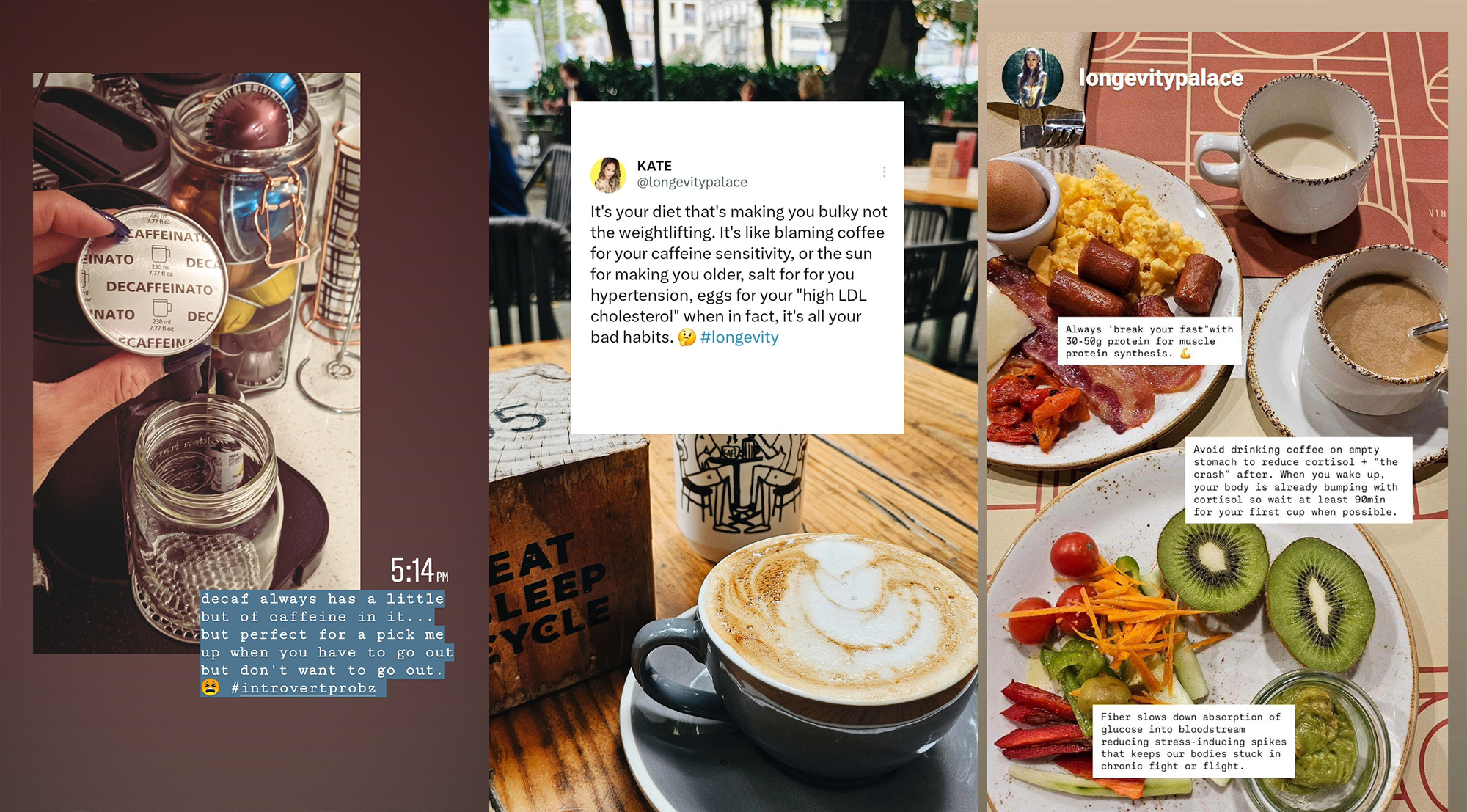
Pro-Tip #2: Never drink coffee on an empty stomach
Listen up… especially for us ladies and our forever-fluctuating hormones in our 28-day cycles.
Caffeine induces stress. Too much of it makes us sick over time.
Most of us are unconsciously chronically stressed.
Here’s why you should never drink coffee on an empty stomach:
- When you wake up, your body is filled with cortisol, the stress hormone. Having coffee with food will stabilize your blood sugar, preventing another spike of stress (cortisol) in your system.
- Coffee relaxes the lower esophageal sphincter, so it may not shut completely, causing acid reflux and increasing the risk of heartburn and stomach acidity.
- The sudden surge of caffeine on an empty stomach can trigger anxiety, nervousness, and jittery feelings, resulting in more stress.
- For chronically stressed individuals (aka most of us), drinking coffee on an empty stomach can worsen stress by increasing cortisol levels. This can lead to increased anxiety, sleep problems, and a weakened immune system.
The Solution:
By eating a small, healthy snack or a light breakfast with your coffee, you can:
- Stabilize Blood Sugar: Prevent the “crash” by providing a steady energy source.
- Reduce Stomach Acid: Food helps buffer the acidity of coffee, minimizing the risk of heartburn.
- Improve Nutrient Absorption: Eating with your coffee can enhance the absorption of essential nutrients.
🌱 Kate’s Tips:

I eat a simple breakfast of protein, fat, and probiotics (no carbs unless I'm exercising because I’m already fat-adapted and have good metabolic flexibility): steak, eggs, avocado, and kimchi (yes). Then coffee.

I occasionally drink coffee on an empty stomach if I need its performance-enhancing benefits, such as on race day or before a long and challenging workout. Progress, not perfection.
🔥 Bonus: Best Practices To Maximize Benefits of Caffeine
- Don’t drink 8-10-12 hours before you sleep (depends on sensitivity). Caffeine will disrupt the quality and architecture of your sleep.
- Dose matters. Body weight is a good measurement tool (1-3mg of kg of body weight).
- If you are not caffeine-adapted, start on the lower end.
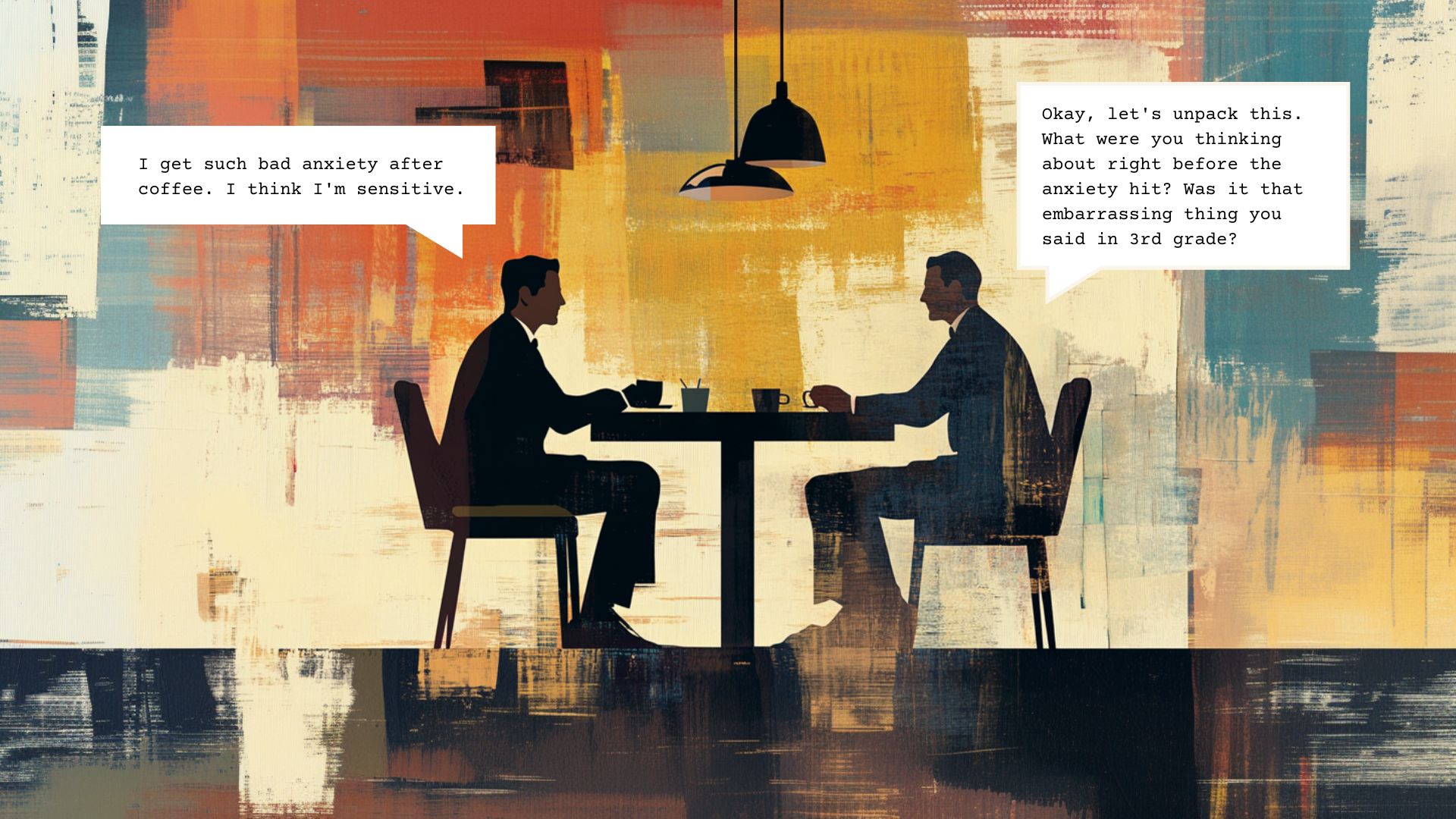
- If caffeine increases heart rate and anxiety, you’re not caffeine-adapted.
- Hydrate! Caffeine is a diuretic, so consume an equal volume of water (best with electrolytes, a pinch of salt) to offset jitters. For every cup of coffee, drink one glass of water.
- Try L-Theanine to counteract the jitters. L-Theanine blunts pro-alertness neurons in your brain, so it evens caffeine out. The effective dosage is 200-400mg to offset caffeine.
- Delay 90-120 min on most days to avoid the ‘crash’; you’ll begin a disruptive cycle when you drink another cup in the afternoon.
- If you can’t delay caffeine, start with baby steps: 15 minutes per day.
- Drink decaf if you need a second cup in the afternoon (which still has a little caffeine in it).
Biohacking Caffeine For Sports & Mental Performance:
- Drink caffeine every other day to maximize athletic performance.
- Caffeine on an empty stomach maximizes the performance benefits of caffeine (but don’t do this often).
- A 5-day absence from caffeine will significantly increase its performance-enhancing benefits when you take it on the 6th day (race day, adjusting to new time zones, etc.).
- If you’re not caffeine-adapted, don’t drink coffee on days when you have an important event because it can be detrimental to your levels of anxiety and focus.
- Pro-tip: Ingest coffee prior to exercise if you don’t like it so use caffeine as a reinforcer— will subconsciously make exercise more enjoyable and can change your relationship with exercise.
- Using caffeine at the end of the learning bout enhances the memory of things we are trying to learn. Why? Increases in catecholamines (dopamine, epinephrine, and norepinephrine) lock in the memory of things that preceded those catecholamines. Refer to the “reinforcing” theory above. 1-3mg per kg of body weight to spike adrenaline after you complete a course, research for a grant, study, etc.
⚠️ Note: these are only best practices. If you want to optimize your energy, you can begin with baby steps and slowly incorporate these into your life.

Be kind to yourself and be patient.

Celebrate the small wins along the way.

Kate’s Morning / Coffee Routine
In my 20s, I’d roll out of bed and make coffee while preparing for work. Bike to work rain, snow, or shine. Perhaps head to the company gym to lift weights, all fasted. I end with a refreshing cold shower, and I grab another coffee before heading to my desk. I’ll have another coffee around 3pm. Sip green tea throughout the day (which also has caffeine).
When we were younger, we could do anything we wanted—seemingly immune to caffeine’s harmful long-term effects when not consumed properly.
I thought I was invincible until I was 33 (only because everything happened at once because if it were only one incident, my body would’ve weathered the storm: car accident, pandemic, isolation, starting two businesses simultaneously, trauma from a super toxic relationship, etc).
Because I took it upon myself to fix my body, I know more than ever, and I’m passionate about teaching because we can truly have the power to heal ourselves.
As we age, stress, toxins, and inflammation wear down our bodies, so switching strategies and adapting is in our best interest.
This is the routine I used when I began the new habit of delaying caffeine. It’s not easy to break a lifelong habit of not having my first cup of joe right upon waking! It was hard work, but now, it’s as easy as brushing my teeth and has done wonders for my energy levels. I highly highly recommend this to anyone.
- Habit-stack: I meditate before I get out of bed: 10-30+ minutes, depending on schedule. My body wakes me automatically after approximately 8 hours of sleep like clockwork. I can literally feel the cortisol flowing through my body, but I LOVE meditating. This new habit ‘buys me time,’ so I’m not tempted to drink coffee immediately, which I’ve been doing my entire life.
- Sit somewhere I can have lots of direct sunlight, journal, read, answer essential messages, and do some LinkedIn engagement. I get this over with in the morning because I rarely go on my phone or social media the rest of the day.
- Do a round of deep work (90 minutes, ultradian cycles).
- Reward myself with my first cup of coffee and a protein-rich breakfast.
- Habit-stack: I put a couple of scoops of collagen in my coffee, which I’ve been doing daily since 2016. My hair, skin, and nails have been glowing and growing!
- Looking back, I may have anchored coffee to exercise in my 20s because I used to work out at 5am every day before work— I always woke up looking forward to my cup of coffee, which probably strengthened my relationship with exercise.
So what about you? Are you going to begin delaying your caffeine?
It will be the best thing you’ve done, trust me.
Let me know how it goes!

