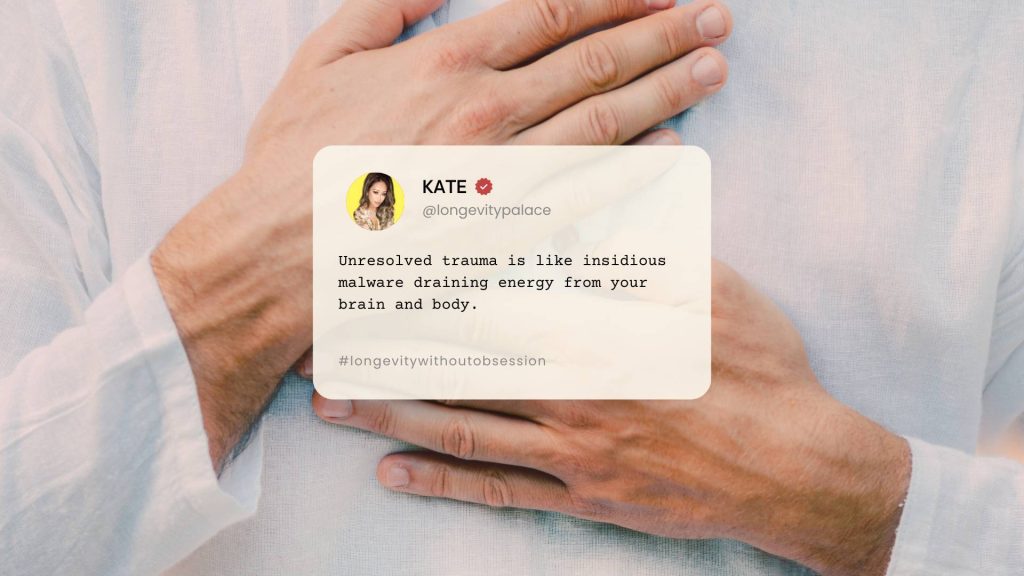

The Elephant in the Room: Why We’re Afraid to Face Trauma—and How It’s Sabotaging Our Health and Longevity
Let’s cut the bullshit: In a world obsessed with quick-fix biohacks, anti-aging creams, and miracle supplements, we’re ignoring the massive elephant trampling our healing potential—unresolved trauma.
These interventions promise the world—glowing skin from collagen, rapid recovery from peptides like BPC-157, or energy balance from Reiki and even cancer treatments—but they often fall flat, not because they’re inherently flawed, but because hidden barriers like poor absorption, lack of regulation, interactions, and above all, the chronic stress of suppressed emotions sabotage their effectiveness.
Society has conditioned us to coddle fragility, turning generations into snowflakes who crumble at the first sign of adversity. We’ve lost our grit, our resilience, all because we’re terrified of hurting feelings or digging into the messy truth of our emotional wounds.
But here’s the wake-up call: Your body is a self-healing powerhouse, designed to repair and thrive.
Yet, when suppressed emotions and buried traumas keep you locked in fight-or-flight, no therapy, supplement, or treatment stands a chance.
It’s time to stop tiptoeing and start confronting this head-on. If we want real longevity, we must reclaim our inner strength.
The Fight-or-Flight Trap: Your Body’s Ancient Survival Mode Gone Wrong
Imagine your nervous system as a vigilant guardian, primed for threats. In short bursts, fight-or-flight saves lives—pumping adrenaline, sharpening focus. But when unresolved traumas linger, this mode becomes chronic, flooding your system with cortisol and hijacking healing.
As trauma expert Dr. Gabor Maté explains, “Trauma is not what happens to you but what happens inside you.” This internal wound disrupts everything: digestion falters, immunity weakens, and inflammation surges, paving the way for diseases like heart issues, autoimmune disorders, and even shortened lifespans
Dr. Daniel Amen, a pioneer in brain health, echoes this: Emotional and physical trauma alters the brain, but “hurt brains hurt people and healing brains can lead to healing in relationships.”
Negativity from unresolved pain disrupts brain function, making recovery an uphill battle.
Bessel van der Kolk, author of The Body Keeps the Score, nails it: “Traumatized people chronically feel unsafe inside their bodies: The past is alive in the form of gnawing interior discomfort.”
And Peter Levine, founder of Somatic Experiencing, adds, “Trauma is not what happens to us, but what we hold inside in the absence of an empathetic witness.”
Unresolved Trauma: The Root Cause Hiding in Plain Sight
Trauma isn’t just “big T” events like abuse— it’s often insidious, like neglect or criticism, imprinting on your nervous system and creating a “proinflammatory phenotype.”
Dr. Maté warns that unaddressed trauma fuels addictions and illnesses, stating, “Not only does our individual and societal sanity depend on connection; so does our physical health.”
Van der Kolk emphasizes safety: “The single most important issue for traumatized people is to find a sense of safety in their own bodies.”
In Sacred Medicine, Dr. Lissa Rankin explores how trauma disembodies us: “We live in a disembodied culture because trauma causes us to leave our bodies.” She highlights healing paradoxes, noting that true recovery involves humility and addressing traumas that “cloak the spark” of our inner vitality.
Levine adds hope: “The paradox of trauma is that it has both the power to destroy and the power to transform and resurrect.”
This emotional baggage manifests physically—fibromyalgia, chronic fatigue, or pain—with studies showing 88% of pain sufferers have unprocessed trauma.
Early stress predicts shorter lifespans via epigenetic changes.

Adverse Childhood Experiences (ACEs)
To dig deeper, let’s unpack Adverse Childhood Experiences (ACEs), a framework pioneered by the landmark CDC-Kaiser ACE Study in the late 1990s.
ACEs refer to potentially traumatic events occurring before age 18 that can profoundly shape health and behaviour for life.
They’re not rare curiosities—they’re alarmingly common, affecting about 64% of U.S. adults who report at least one ACE, and nearly 1 in 6 (17.3%) enduring four or more. Among high school students, the numbers are even starker: Three in four report at least one ACE, and one in five face four or more, with emotional abuse being the most prevalent at 34%.
ACEs fall into three main categories:
- Abuse: Physical, emotional, or sexual mistreatment.
- Neglect: Physical (e.g., lack of food, shelter) or emotional (e.g., lack of love, support).
- Household Dysfunction: Growing up with parental separation/divorce (28.4% prevalence), substance abuse in the home (26.9%), mental illness, incarceration of a family member, or witnessing domestic violence.
Broader experiences like community violence, discrimination, homelessness, or food insecurity are increasingly recognized as ACEs, amplifying risks for marginalized groups such as females, non-Hispanic American Indian or Alaska Native adults, and those unemployed.
The long-term toll? Devastating.
ACEs create “toxic stress” that alters brain development, immune function, and stress responses, leading to a cascade of issues: higher risks for depression (up to 21 million cases potentially preventable), heart disease (1.9 million cases), cancer, diabetes, suicide, and even involvement in sex trafficking or teen pregnancy. Recent 2024-2025 studies reinforce this—linking ACEs to childhood homelessness, poorer health outcomes in kids under 16, and even intergenerational transmission through epigenetic changes.
Dr. Gabor Maté, drawing from his own ACEs like early separation from his mother during the Holocaust, emphasizes: “The greater the child’s terror, and the earlier it is experienced, the harder it becomes to develop a strong and healthy sense of self.” He adds that ACEs often manifest as addictions or illnesses later, underscoring: “The automatic repression of painful emotion is a helpless child’s prime defence mechanism and can enable the child to endure trauma that would otherwise be unbearable.”
Preventing ACEs isn’t just possible—it’s transformative.
CDC estimates it could slash suicide attempts by 89%, prescription misuse by 84%, and chronic sadness by 66% among youth.
Yet, in our snowflake society, we shy away from these conversations, letting ACEs fester into adult crises.

Why Healing Modalities Work for Some (But Not You?)
Trauma explains the variability: If you’re stuck in survival mode, treatments can’t penetrate. Studies confirm unresolved trauma leads to poor treatment outcomes, affecting engagement and efficacy. It fosters distrust in healthcare, reducing adherence. For instance, in energy medicine or supplements, suppressed emotions mute benefits.
Take collagen supplements, hyped for skin and joint health. A 2025 systematic review found no clinical evidence that they prevent or treat skin aging. Harvard’s 2023 analysis echoed: Insufficient proof for benefits. A 2025 BBC report called the evidence weak. But take these with a grain of salt: What about participants’ unresolved trauma? If chronic stress suppresses immunity or inflammation overrides repair, collagen might fail not because it’s useless, but because the body’s not in healing mode.
This extends to serious treatments like chemotherapy, where chronic stress and unresolved trauma can decrease efficacy.
A study of 1.4 million people found mental disorders (eg. from suppressed trauma) precede and worsen chronic conditions like heart disease or cancer, reducing treatment success by up to 50% via biological pathways. Emotional repression is linked to physical health declines, including weakened immunity that hampers treatments.
A 2025 review highlights how chronic stress alters the tumor microenvironment, disrupting anti-tumor immunity and promoting cancer malignancy, thus reducing chemo’s impact. In breast cancer patients, chronic physiologic wear and tear from stress is associated with decreased treatment completion and worse survival outcomes. PTSD in cancer patients, often stemming from trauma, leads to higher recurrence and reduced response to therapies. Stress precipitates autoimmune disorders like type 1 diabetes in predisposed individuals via immune disruptions. PTSD significantly raises the risk for autoimmune condition.
Trauma links to worse outcomes in conditions like cardiovascular disease, where higher PTSD severity predicts failure. As Rankin notes in Sacred Medicine, healing requires addressing these barriers.
Your body wants to heal. It’s wired for homeostasis.
Releasing trauma flips the switch.
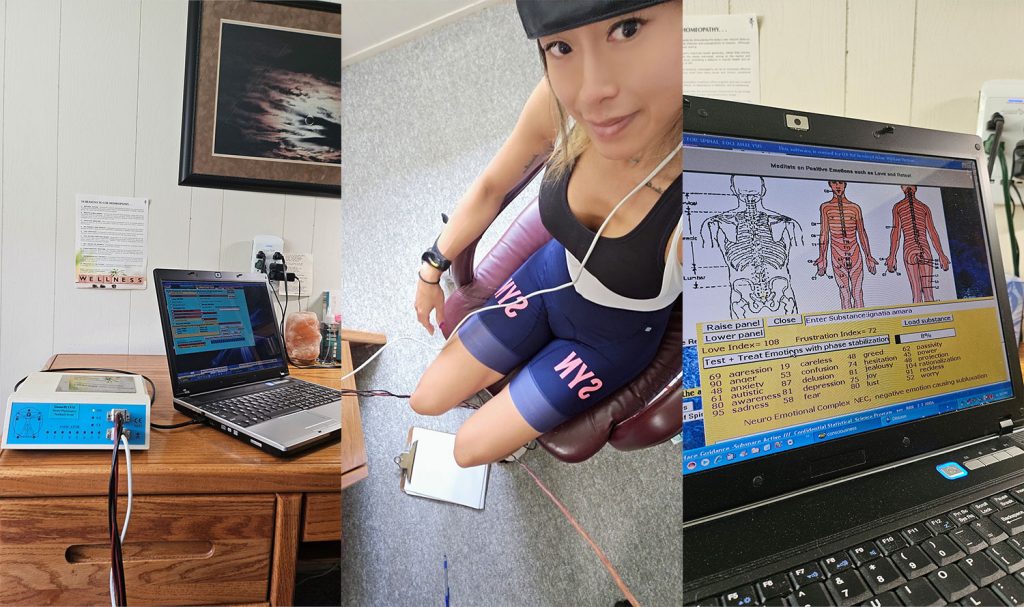
Breaking Free: Strategies to Naturally Heal and Restore Your Body’s Healing State
To shift from fight-or-flight to rest-and-digest, focus on somatic, emotional, and lifestyle practices. Here’s a digestible list of evidence-backed strategies:
- Somatic Experiencing (SE): Developed by Peter Levine, SE gently discharges stored trauma energy through body awareness. Start with guided sessions to build safety and resilience.
- Trauma-Informed Yoga or Breathwork: Practices like yoga restore nervous system balance, reducing inflammation. Van der Kolk recommends movement to reconnect with the body.
- EMDR (Eye Movement Desensitization and Reprocessing): Processes traumatic memories, easing emotional blocks. Effective for PTSD, it helps shift to healing mode.
- Journaling and Emotional Release: Write about suppressed feelings to discharge stress. Combine with creative expression for profound awakening.
- Mindfulness and Meditation: Cultivate present-moment awareness to calm the amygdala. Dr. Amen advocates brain-healthy habits like this to heal from trauma.
- Building Safe Connections: Therapy or support groups foster empathy, countering isolation. Community and connection are vital for overall well-being.
- Lifestyle Foundations: Prioritize sleep, nutrient-dense foods, and movement in safe environments. Avoid re-traumatizing settings to amplify recovery.
- Nature and Grounding: Spend time outdoors to regulate the nervous system. After all, aren’t we all Children of Mother Earth?
Healing isn’t linear—layers may resurface, but persistence builds grit.

Final Thoughts: Reclaim Your Natural Healing Power
Unresolved trauma isn’t a weakness.
It’s the elephant we’ve ignored too long, fueled by a society scared of discomfort.
Supplements, peptides, and treatments might seem like shortcuts, but without addressing trauma’s sabotage, they’re just expensive illusions.
By facing it, we unlock true longevity: vibrant, resilient living.
Ultimately, healing isn’t about the modality—it’s about aligning it with your story. Unresolved trauma or biological barriers turn masterpieces into messes.
What if we started there?
What shadows are you ready to confront?
Subscribe to our blog for more unconventional longevity insights.
Your rebirth awaits.